

New Dropside Trailers From PR Trailers
27th Jul, 2026
In transport, construction, agriculture, and general freight operations, the right trailer affects more than the ability to move a load. It influences how freight is loaded, secured, accessed, delivered, and used within the wider fleet.
For businesses moving building materials, mixed freight, site supplies, agricultural goods, or equipment, new dropside trailers remain a practical option. They offer access to the load area, support varied cargo requirements, and can suit operations where the freight or loading environment changes from one job to the next.
At PR Trailers, we approach trailer selection with the work in mind. A trailer should not only meet a basic specification. It should make sense for the load, the route, the loading process, and the way the business operates every day.
For businesses looking at new PR Trailers, the decision should start with the role the trailer needs to play in the operation.
Why Dropside Trailers Remain Practical
Dropside trailers are useful because they give operators access and flexibility.
In many working environments, loading and offloading are not always done under the same conditions. A business may need to move bricks, steel, timber, pallets, agricultural supplies, or general freight. Some loads may require side access. Others may need a trailer that can support mixed cargo without limiting the loading process.
That is where a dropside trailer can make sense.
The drop sides allow easier access to the load area, while still giving the trailer side structure for certain types of freight. This can be useful for businesses that work across construction sites, yards, farms, warehouses, suppliers, and customer delivery points.
The value of a dropside trailer is not only in what it can carry. It is in how practically the load can be handled.
A trailer that slows down loading, limits access, or does not suit the type of freight being moved will quickly create pressure in the operation. A trailer that fits the work will support the business quietly and consistently.
Where New Dropside Trailers Fit Best
New dropside trailers can support several industries, but the strongest fit is usually where freight handling and access matter.
In construction and building supply, they can be useful for transporting materials such as bricks, steel, timber, pipes, pallets, bagged goods, and general site supplies. These loads often move between yards, suppliers, construction sites, and customer locations. In that environment, access to the load area can make a real difference.
For general freight operators, the value is flexibility. Not every load is the same. Some businesses need a trailer that can handle different types of cargo depending on the job, contract, or customer requirement. A dropside trailer can support that kind of mixed-use operation, provided it suits the way the freight is loaded and secured.
In agriculture and rural operations, dropside trailers can be used for moving feed, fencing, materials, equipment, and other supplies. These operations often need equipment that can handle varied loads and practical loading conditions.
For site-based and industrial transport, dropside trailers can support the movement of goods between depots, worksites, suppliers, and customers. Contractors and industrial suppliers often need trailers that can carry different materials without being restricted to one narrow application.
The important point is that a dropside trailer should be chosen because it fits the work. It is not the right answer for every operation, but it is a strong option where access, mixed freight, and practical loading are priorities.
Why Buying New Can Make Operational Sense
Used trailers can be a practical choice for many businesses, especially when a buyer needs available capacity and wants to manage costs carefully. PR Group also offers used truck trailers for customers looking at pre-owned options.
There are, however, situations where buying new makes stronger operational sense.
A new dropside trailer gives the buyer a fresh starting point. The business does not inherit previous wear, unknown usage patterns, or operating history from another owner. That can be valuable when the trailer is being added to the fleet for long-term use, new contracts, or consistent daily work.
Buying new also allows the business to focus on the right trailer from the beginning. Instead of adapting the operation around a trailer that happens to be available, the buyer can consider what the trailer needs to carry, how it will be loaded, where it will operate, and how it will fit into the current fleet.
For businesses replacing older trailer stock or expanding capacity, that matters. A new trailer can support clearer planning and give the business more confidence in the starting condition of the asset.
The decision is not simply about choosing new over used. It is about choosing the option that gives the operation the right fit for the work ahead.
Dropside Trailers Compared to Other Trailer Options
No trailer type is the right fit for every application.
A flat deck trailer offers an open platform and can be useful where unrestricted access to the load area is important. A tautliner offers freight protection while still allowing efficient loading for many logistics operations. A superlink or specialised trailer may be better suited where volume, configuration, or application-specific requirements are the priority.
A dropside trailer sits in a practical space between open access and side support. It can suit businesses that need loading flexibility but still want the benefit of a drop-side structure for certain types of cargo.
That is why trailer selection should not start with the trailer name alone. It should start with the freight.
What needs to be moved?
How will it be loaded?
What route will it travel?
How often will the trailer be used?
What truck will it be paired with?
What does the business need the trailer to do every day?
These questions matter because the wrong trailer not only affects the load. It affects turnaround time, handling, scheduling, and fleet productivity.
For a broader look at trailer selection, PR Group has also covered the importance of matching the trailer to the work in its article on new trailers for the logistics and freight transport industry.
What to Consider Before Buying a New Dropside Trailer
Before investing in a new dropside trailer, buyers should look beyond the trailer type and focus on how it will perform once it enters the fleet.
The first consideration is freight type. A trailer used mainly for construction materials may have different requirements from one used for agricultural supplies or mixed general freight. The more clearly the buyer understands the load, the easier it becomes to choose the right trailer direction.
Loading and offloading also matter. Some freight may be loaded by forklift, some by crane, some by hand, and some from more than one access point. A trailer may be suitable for the cargo, but if it does not suit the way that cargo is handled, it can slow the operation down.
The route and operating environment should also be considered. A trailer used for local site deliveries may face different demands from one used for regional transport or longer-distance work. The trailer must make sense for where and how it will be used.
Load securing is another important part of the decision. Carrying the load is only one side of the job. The freight must also be positioned, contained, and secured in a way that supports safe and practical movement.
The final consideration is fleet fit. A new trailer should work with the trucks, routes, drivers, loading environments, and operational structure already in place. If it does not fit the wider fleet, it can create unnecessary complexity.
This is where supplier support becomes important. When a business is choosing a new dropside trailer, the conversation should not only be about price and availability. It should also cover the freight, the loading process, the route, and the role the trailer needs to play.
If you are comparing trailer options, speak to PR Trailers about whether a dropside trailer is the right fit for your freight, route, and loading requirements.
PR Trailers, a division of PR Group
PR Trailers forms part of PR Group, one of SA’s leading truck, trailer and plant dealers.
For buyers, that broader environment matters because trailer decisions do not sit in isolation. They connect to trucks, loading requirements, repairs, spares, fleet planning, and the cost of keeping equipment productive.
PR Group has long-standing experience in the transport and equipment industry. The business operates across used trucks, used trailers, new trailers, plant equipment, repairs, spares, manufacturing, and rentals.
That experience gives PR Trailers a practical understanding of how trailer choices affect real businesses. A customer may come in looking for a new dropside trailer, but the right conversation should still consider the work behind the enquiry.
What needs to be moved?
How will it be loaded?
Where will the trailer operate?
Is the business replacing older stock or adding new capacity?
Does the trailer need to support one type of work or several?
These are the questions that help buyers make better decisions.
PR Trailers is not only there to supply available stock. The goal is to help customers choose trailer solutions that make sense once they are put to work.
Choosing a New Dropside Trailer That Works in Practice
A new dropside trailer should be chosen because it fits the freight, supports the loading process, suits the route, and makes sense for the operation.
For some businesses, a dropside trailer will be the right fit because they need access and flexibility for varied cargo. For others, a flat deck, tautliner, superlink, or more specialised trailer may be more suitable.
That is why the strongest trailer decision is made before the trailer enters the fleet.
A trailer that fits will support the operation without adding unnecessary pressure. A trailer that does not fit will show the mismatch quickly through slower handling, poor utilisation, or added complexity.
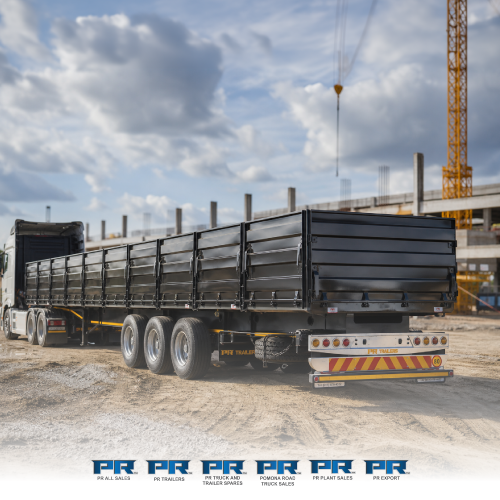
PR Trailers offers a range of new trailer options, including the NEW PR TRI AXLE FLAT DECK WITH DROP SIDES. For buyers who need practical trailer capacity, this gives them the opportunity to consider a new trailer option based on the demands of their operation.
Speak to PR Trailers About New Dropside Trailers
New dropside trailers remain a practical option for businesses that need access, mixed freight capability, and a trailer that can support real working requirements.
They can make sense for transport, construction, agriculture, general freight, site deliveries, and businesses that need trailer capacity for varied loads.
The strongest trailer choice is not based on the trailer name alone. It is based on the freight, the loading process, the route, and the role the trailer needs to play in the fleet.
If your operation needs reliable new dropside trailer capacity, speak to PR Trailers. We will help you choose a trailer that fits the freight, supports practical loading, and makes sense for the way your business works.