

Used Backhoe Loaders for Sale in South Africa
30th Sep, 2026
In construction, agriculture, civil works, mining support, and site-based operations, the right machine can affect how quickly work moves from one stage to the next. When digging, loading, trenching, backfilling, or material movement slows down, the pressure is felt across the entire site.
For many businesses, used backhoe loaders remain a practical option because they can support more than one function without the cost profile of buying new equipment. They can assist with digging, loading, site preparation, trenching, and general support work where versatility matters.
At PR Plant, the focus is not only on supplying a machine. It is about helping customers choose equipment that fits the work, the site conditions, and the way the operation needs to function.
For businesses looking at used plant equipment, the decision should start with the role the machine needs to play on site.
Why Used Backhoe Loaders Remain Practical
Backhoe loaders remain useful because they combine digging and loading capability in one machine.
In many working environments, the job is not limited to one task. A business may need to dig trenches, move material, load trucks, backfill areas, prepare sections of a site, or support general maintenance work. In these situations, a machine that can serve more than one function can make daily work more manageable.
That is where a backhoe loader can make sense.
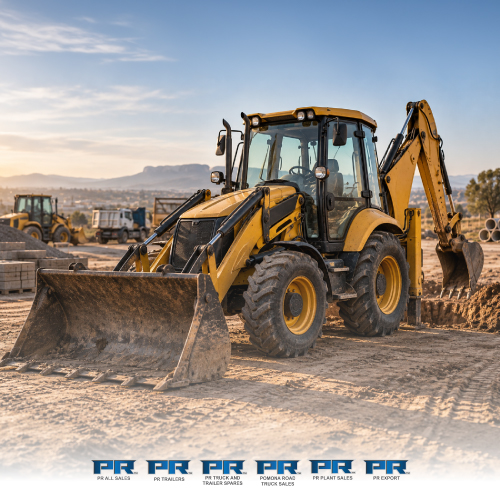
The front loader can support material movement and loading tasks, while the rear digging arm can assist with trenching, excavation, and other digging requirements. This gives the machine a level of flexibility that can be valuable across construction sites, farms, yards, industrial areas, and contractor operations.
The value of a used backhoe loader is not only in what it can dig or load. It is in how well it fits the work, the site conditions, and the daily requirements of the operation.
A machine that cannot meet the job requirements will quickly create pressure. A machine that fits the work can support the operation quietly and consistently.
Where Used Backhoe Loaders Fit Best
Used backhoe loaders can support several industries, but the strongest fit is usually where digging, loading, trenching, and general site-support tasks are needed.
In construction and civil works, backhoe loaders can assist with trenching, site preparation, backfilling, loading materials, moving soil, and supporting the early stages of development. Construction sites often require equipment that can handle more than one task as the project progresses.
For agricultural and rural operations, backhoe loaders can support drainage work, farm maintenance, loading materials, moving supplies, clearing areas, and general infrastructure support. Farms and rural sites often need machinery that can be used across different jobs without being limited to one narrow function.
In mining support and industrial yards, backhoe loaders can be useful for general support work, material movement, site preparation, maintenance tasks, trenching, and loading. These environments often rely on machines that can assist with practical daily activities around the site.
For plant hire businesses and contractors, used backhoe loaders can also make sense because they offer versatility across different job types. A machine that can dig, load, backfill, and move materials may help improve utilisation across a fleet.
The important point is that a used backhoe loader should be chosen because it fits the work. It is not the right answer for every operation, but it is a strong option where digging and loading support are priorities.
Why Buying Used Can Make Operational Sense
New plant equipment can be the right decision in many cases, especially when a business wants a fresh starting point or a machine specified around long-term fleet planning.
There are, however, many situations where buying used makes strong operational sense.
A used backhoe loader can help a business add digging and loading capacity without the same capital commitment as buying new. This can be useful when equipment is needed for a current project, a new contract, replacement capacity, or a specific operational requirement.
Used equipment can also make sense for businesses that already understand the type of work the machine needs to perform. When the application is clear, the buyer can focus on finding a unit that matches the required digging depth, loading requirements, condition, and site environment.
The decision is not simply about buying used because it costs less. It is about choosing a machine that can deliver the required function while still making commercial sense for the business.
A used backhoe loader should not feel like a compromise. When selected correctly, it can give the operation the digging, loading, and site-support capacity it needs while supporting the way the business works.
Used Backhoe Loaders Compared to Other Equipment
No machine is the right fit for every application.
An excavator may be better suited for dedicated digging and excavation work, especially where digging is the main requirement. However, it may not offer the same loading versatility as a backhoe loader.
A front-end loader can support material movement and loading tasks, but it may not provide the rear digging capability needed for trenching, backfilling, or smaller excavation work.
A telehandler may be useful where lifting, reach, and material placement are the main priorities, but it is not always the right machine for digging and trenching requirements.
A backhoe loader sits in a practical space between digging and loading. It can be useful where the operation needs one machine to support more than one type of site task.
That is why equipment selection should not start with the machine name alone. It should start with the work.
-
What needs to be dug?
-
What needs to be loaded?
-
How deep does the machine need to work?
-
Where will the machine operate?
-
How often will it be used?
-
What site conditions will it need to handle?
These questions matter because the wrong machine not only affects one task. It affects workflow, site productivity, handling time, and the pressure placed on the rest of the operation.
What to Consider Before Buying a Used Backhoe Loader
Before investing in a used backhoe loader, buyers should look beyond price and availability. The machine needs to be assessed according to how it will perform once it enters the operation.
The first consideration is application fit. A backhoe loader used mainly for trenching and civil work may have different requirements from one used on farms, industrial sites, or general support tasks. The more clearly the buyer understands the application, the easier it becomes to choose the right machine.
Digging and loading requirements are also important. The buyer should consider the type of digging work required, the depth needed, the loading tasks, the materials being moved, and how often the machine will need to shift between functions. A unit that does not match the work can limit productivity and create unnecessary pressure on site.
Machine condition matters when buying used plant equipment. Buyers should consider the general mechanical state of the machine, visible wear, tyres, hydraulics, boom and arm condition, loader arms, bucket condition, cabin condition, and service history where available. A used machine must be evaluated according to how it is expected to perform, not only how it looks.
Attachments and practical use should also be considered. Depending on the machine and the application, backhoe loaders may be used with different buckets or attachments. This can add value, but only if the machine and attachments suit the work being done.
Site conditions are another key part of the decision. A machine working on a farm may face different demands from one working on a construction site, industrial yard, roadworks area, or more confined environment. The buyer should think about ground conditions, space limitations, movement around the site, and how often the machine will need to travel between tasks.
The final consideration is supplier support. When a business is choosing used plant equipment, the conversation should not only be about price. It should also cover the machine, the condition, the application, and whether the unit is suitable for the work.
If you are comparing used backhoe loaders, PR Plant can help you assess whether a machine fits your digging requirements, loading needs, site conditions, and daily operating requirements.
PR Plant, a Division of PR Group
PR Plant forms part of PR Group, giving buyers access to a broader transport and equipment environment.
For buyers, that broader experience matters because plant equipment decisions do not sit in isolation. They connect to site productivity, downtime, repairs, spares, transport requirements, fleet planning, and the cost of keeping work moving.
The business operates across used trucks, used trailers, new trailers, plant equipment, repairs, spares, manufacturing, and rentals. This gives PR Group a practical understanding of how equipment choices affect real operations.
A customer may come in looking for a used backhoe loader, but the right conversation should still consider the work behind the enquiry.
-
What does the machine need to dig?
-
What does it need to load?
-
Where will it operate?
-
How often will it be used?
-
Is the business replacing a machine or adding new capacity?
-
Does the unit need to support one task or several?
These are the questions that help buyers make better decisions.
PR Plant is not only there to supply available equipment. The goal is to help customers choose machines that make sense once they are put to work.
Choosing a Used Backhoe Loader That Works in Practice
A used backhoe loader should be chosen because it fits the digging requirements, loading needs, site conditions, and the way the operation works.
For some businesses, a backhoe loader will be the right fit because they need one machine that can dig, load, backfill, and support general site activity. For others, an excavator, loader, telehandler, or another type of plant equipment may be more suitable.
That is why the strongest equipment decision is made before the machine enters the site.
A machine that fits will support the operation without adding unnecessary pressure. A machine that does not fit will show the mismatch quickly through delays, limited utilisation, handling issues, or added operating complexity.
For buyers considering used backhoe loaders, the key is not to choose based on availability alone. The machine must match the work it is expected to do.
Speak to PR Plant About Used Backhoe Loaders
Used backhoe loaders remain a practical option for businesses that need digging, loading, trenching, backfilling, and site-support capacity across construction, agriculture, civil works, mining support, industrial, and site-based environments.
They can make sense for operators that need additional equipment capacity, want to manage capital carefully, or need a machine that can support more than one site task.
The strongest choice for a backhoe loader is not based on price alone. It is based on the machine, the application, the working conditions, and the role the equipment needs to play in the operation.
If your operation needs used backhoe loader capacity, speak to PR Plant. We will help you consider the machine, the application, and the working conditions so you can choose equipment that makes sense for the work ahead.