

Why Used TLBs Still Make Commercial Sense on Modern Sites
4th Mar, 2026
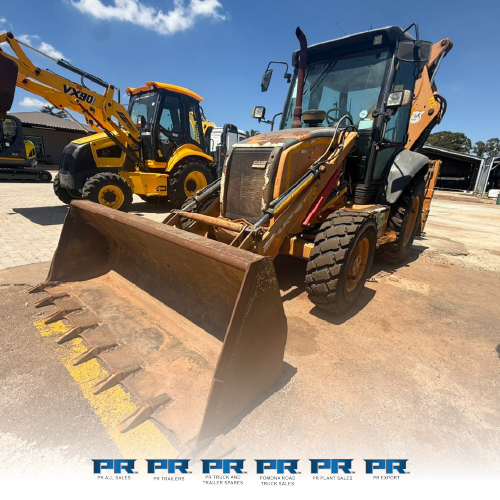
In today’s construction and infrastructure environment, contractors are under increasing pressure to do more with less. Rising fuel costs, volatile material prices, tighter project timelines, and cautious capital expenditure have forced businesses to rethink how they deploy plant equipment on site. One question continues to surface across South African construction, civils, and agricultural projects: Do used TLBs still make commercial sense on modern sites?
The short answer is yes - but the long answer reveals why used tractor loader backhoes remain one of the smartest, most versatile investments for contractors who prioritise productivity, flexibility, and financial control.
This is exactly where PR Plant & Equipment plays a critical role - supplying quality used TLBs that align with real-world site demands, not theoretical specs.
The Enduring Role of the TLB on Modern Job Sites
Despite the rise of specialised machinery, the TLB remains one of the most widely used pieces of plant equipment in South Africa. Its value lies in its multi-functional capability - combining excavation, loading, trenching, material handling, and light demolition into a single machine.
On modern sites, particularly those that require:
-
Utility trenching
-
Roadworks and maintenance
-
Small to mid-scale civil construction
-
Agricultural infrastructure development
-
Property development and bulk earthworks
A TLB often replaces the need for multiple machines.
Used TLBs continue to thrive because the fundamental work they perform has not changed, even as sites become more regulated and cost-sensitive.
Capital Preservation in a Cost-Pressured Industry
Why Used TLBs Still Make Commercial Sense on Modern SitesOne of the strongest arguments for used TLBs is financial realism.
New construction equipment comes with a significant upfront cost, long lead times, and rapid depreciation in the first few years of ownership. In contrast, a quality used TLB allows contractors to:
-
Preserve working capital
-
Reduce exposure to depreciation
-
Allocate budget to labour, fuel, and project execution
-
Scale fleets without over-leveraging
For many contractors, especially small to medium operators, the difference between winning and losing a tender often comes down to cash flow management. Used TLBs support that reality.
Depreciation Has Already Done the Hard Work
New machines lose value the moment they leave the yard. With used TLBs, that initial depreciation curve has already flattened.
From a commercial perspective, this means:
-
More predictable resale values
-
Better asset-to-cost ratios
-
Lower balance sheet risk
-
Easier fleet turnover when operational needs change
For businesses that rotate equipment based on project cycles, used TLBs offer financial flexibility without operational compromise.
Proven Performance Beats Unproven Specs
Modern construction sites demand reliability, not novelty.
Used TLBs that have been properly maintained and inspected bring a major advantage: they are site-proven. Their performance characteristics, fuel consumption, maintenance patterns, and operating limits are already known.
This matters because:
-
Downtime costs more than purchase price differences
-
Operators are often already familiar with established models
-
Parts availability is better for common platforms
-
Repairs are faster due to existing technical knowledge
A used TLB with a solid service history is often more predictable than a brand-new machine still bedding in.
Maintenance and Parts Availability Favour Used TLBs
Another reason used TLBs remain commercially viable is ecosystem maturity.
Established TLB models benefit from:
-
Widely available parts
-
Multiple service providers
-
Lower-cost consumables
-
Familiar diagnostic systems
On modern sites where delays are costly, access to parts and service matters as much as machine capability. Used TLBs, especially those supplied through professional plant equipment divisions, fit seamlessly into existing maintenance workflows.
Right-Sizing Equipment for the Job
Not every site needs the latest machine with maximum specifications.
In many real-world applications:
-
Overspecified equipment increases costs without increasing productivity
-
Simpler machines reduce training time
-
Smaller TLBs offer better manoeuvrability on constrained sites
Used TLBs allow contractors to right-size their fleet, selecting machines that match the scope of work rather than overinvesting in unnecessary capability.
This is particularly relevant for:
-
Municipal work
-
Housing developments
-
Maintenance contracts
-
Agricultural projects
-
Remote or semi-urban sites
Faster Acquisition Means Faster Deployment
New equipment often comes with long procurement timelines, especially when supply chains are disrupted.
Used TLBs offer:
-
Immediate availability
-
Faster site mobilisation
-
Reduced project delays
-
Greater agility when winning short-notice work
In competitive environments, the ability to deploy equipment quickly can be the difference between securing or losing a contract.
Used TLBs Support Smarter Fleet Expansion
Fleet expansion does not always mean fleet replacement.
Many contractors adopt a hybrid fleet strategy, using:
-
New machines for high-utilisation flagship projects
-
Used TLBs for support work, secondary sites, or regional contracts
This approach maximises return on assets while controlling exposure to high capital costs. Used TLBs are ideal for this role, offering dependable performance without inflating overheads.
Compliance and Safety Are Not Compromised
A common misconception is that used equipment cannot meet modern site standards.
In reality, when sourced through a professional plant equipment division, used TLBs can be:
-
Inspected
-
Serviced
-
Prepared to meet site safety requirements
-
Matched to application-specific needs
What matters is how the equipment is supplied, not its age.
Why the Supplier Matters More Than the Machine
The commercial success of a used TLB depends heavily on who you buy it from.
A professional plant equipment division understands:
-
Application suitability
-
Machine condition beyond surface appearance
-
Serviceability and lifecycle expectations
-
Long-term operational realities
This is where PR Plant & Equipment differentiates itself - focusing on functionality, suitability, and operational value, not just inventory turnover.
Used TLBs Are a Strategic Decision, Not a Compromise
In modern construction, success is driven by decision-making - not just machinery.
Choosing a used TLB is often a strategic choice, reflecting:
-
Financial discipline
-
Operational awareness
-
Practical site knowledge
-
Long-term sustainability
When evaluated correctly, used TLBs continue to deliver measurable commercial value across a wide range of industries and site conditions.
Final Thoughts: Commercial Sense That Still Stands
Used TLBs remain relevant because construction fundamentals have not changed. Projects still require digging, loading, trenching, and material handling - often under tight budgets and tighter timelines.
For contractors who value:
-
Capital efficiency
-
Proven performance
-
Fleet flexibility
-
Faster deployment
Used TLBs are not a fallback option - they are a commercially sound solution.
When sourced through a specialist plant equipment division with the right expertise, they continue to earn their place on modern sites across South Africa and beyond.
<scribe -shadow data-crx="okfkdaglfjjjfefdcppliegebpoegaii" id="crxjs-ext" style="position: fixed; width: 0px; height: 0px; top: 0px; left: 0px; z-index: 2147483647; overflow: visible; visibility: visible;"></scribe>